Intervertebral discs play a vital role in keeping your spine healthy. Sitting between each vertebra, these soft, flexible cushions absorb shock, allow movement and help distribute forces through your back during everyday activities.
As we get older, or following injury, these discs can begin to change. Some changes are part of the normal ageing process, while others may cause pain, stiffness or irritation of nearby nerves. Collectively, these changes are often referred to as disc pathology.
The good news is that most disc related problems can be managed successfully without surgery. Osteopathic treatment, combined with appropriate rehabilitation and lifestyle advice, can often help reduce pain, improve movement and support recovery.
What is Disc Pathology?
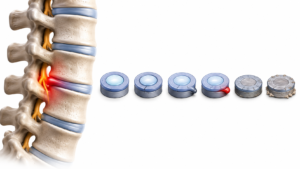
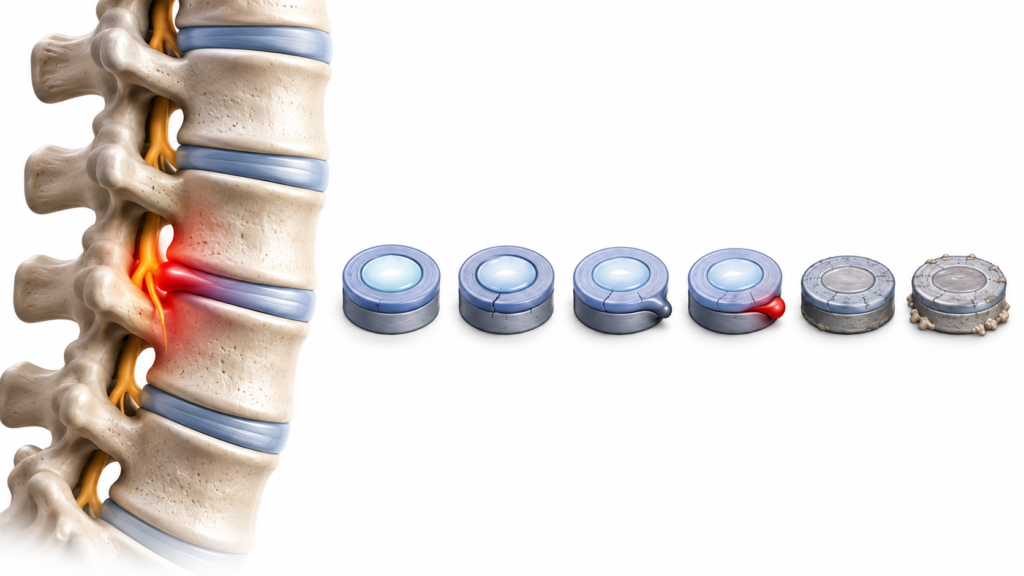
Disc pathology is a broad term used to describe conditions affecting the spinal discs. These include:
- Disc degeneration
- Bulging discs
- Herniated (slipped) discs
- Loss of disc height
- Bone spur (osteophyte) formation
Not every disc change causes pain. In fact, many people have age related changes visible on MRI scans without experiencing any symptoms at all. Treatment should therefore focus on your symptoms and clinical examination, rather than scan results alone.
Why Do Discs Become Damaged?
Several factors can contribute to disc changes, including:
- Natural ageing
- Repetitive bending or lifting
- Poor posture over long periods
- Heavy physical work
- Previous back injuries
- Reduced physical activity
- Smoking
- Excess body weight
Over time, discs gradually lose water content, making them less flexible and less able to absorb shock. Small tears can develop within the outer layers of the disc, occasionally allowing the softer centre to bulge or protrude.
Common Symptoms
Disc related problems can present in several different ways.
Some people experience only mild lower back stiffness, while others develop symptoms caused by irritation of nearby spinal nerves.
Symptoms may include:
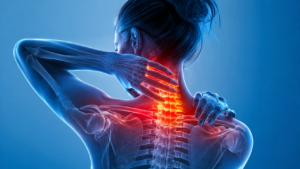
- Lower back or neck pain
- Pain travelling into the leg (sciatica)
- Pain travelling into the arm
- Pins and needles
- Numbness
- Muscle weakness
- Reduced spinal mobility
- Difficulty standing or sitting for long periods
If symptoms include significant weakness, loss of bladder or bowel control, or numbness around the saddle area, urgent medical assessment is required.
How Can Osteopathic Treatment Help?
At Back On Track Healthcare, our osteopaths take a whole person approach rather than focusing solely on the disc itself.
Following a detailed assessment, treatment aims to reduce pain, improve movement and help the body recover naturally.
Treatment may include:
- Gentle spinal mobilisation
- Soft tissue massage
- Joint mobilisation
- Stretching tight muscles
- Improving spinal movement
- Postural advice
- Individual rehabilitation exercises
Rather than attempting to “push a disc back in”, which is a common misconception, osteopathic treatment helps reduce mechanical strain around the affected area while improving the function of surrounding muscles and joints.
This often allows irritated tissues to settle naturally.
Exercise is an Important Part of Recovery
Research consistently shows that remaining as active as possible is beneficial for most people with disc related back pain.
Although a short period of relative rest may be appropriate during the most painful stage, prolonged bed rest is rarely recommended.
Your osteopath may prescribe exercises to improve:
- Core strength
- Hip mobility
- Spinal flexibility
- Balance
- Overall movement confidence
These exercises are progressed gradually as symptoms improve.
Do All Disc Problems Need Surgery?
Fortunately, no.
The vast majority of disc related back pain improves with conservative treatment.
Many herniated discs gradually reduce in size over time as the body naturally reabsorbs part of the protruding material. Combined with appropriate rehabilitation and manual therapy, symptoms often improve significantly over several weeks or months.
Surgery is generally considered only when there is severe nerve compression, progressive muscle weakness, or persistent symptoms that have not responded to appropriate conservative care.
When Should You Seek Professional Advice?
If your back or neck pain has persisted for more than a few weeks, keeps returning, or is affecting your work, sleep or daily activities, it is worth having it assessed.
An accurate diagnosis allows the most appropriate treatment plan to be developed and helps prevent small problems becoming larger ones.
At Back On Track Healthcare, our experienced osteopaths regularly assess and treat patients with disc related neck and back pain. We provide hands on treatment, personalised rehabilitation programmes and practical advice to help you recover safely and return to the activities you enjoy.
If you’re experiencing ongoing back or neck pain, we’d be happy to help.