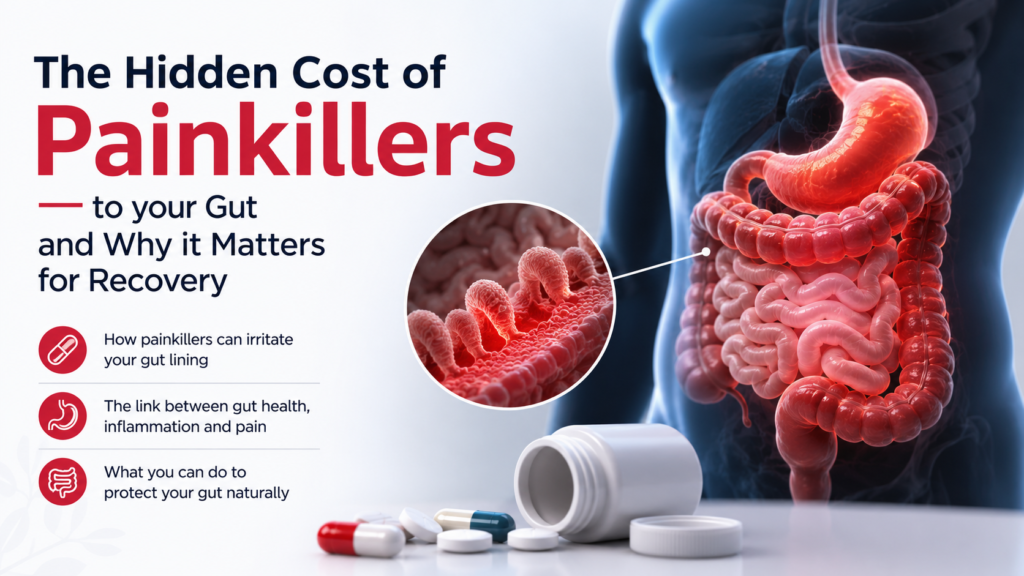
When pain strikes, it’s natural to reach for over the counter painkillers. Medicines such as ibuprofen, aspirin and naproxen, known as non steroidal anti inflammatory drugs (NSAIDs), can be very effective at reducing pain and inflammation. However, many people are unaware that frequent or prolonged use can have a significant impact on gut health.
Your digestive system plays a vital role in overall health and recovery. A healthy gut lining helps absorb nutrients, supports the immune system and protects the body from harmful bacteria. NSAIDs work by blocking chemicals involved in inflammation, but they also reduce substances that help protect the stomach and intestinal lining. Over time, this can lead to irritation, inflammation and, in some cases, stomach ulcers or bleeding.
Even if you do not experience stomach pain, changes to the gut can affect your body’s ability to recover. Poor gut health may reduce nutrient absorption, disrupt the balance of healthy bacteria and increase inflammation throughout the body. For anyone recovering from an injury, surgery or persistent musculoskeletal pain, this may slow the healing process.
This does not mean painkillers should never be used. When taken correctly and for short periods, they can provide valuable relief and help people remain active during recovery. The key is to use them responsibly and only when appropriate. If you find yourself relying on painkillers regularly, it is worth asking whether the underlying cause of your pain has been properly assessed.
At Back On Track Healthcare, we believe that successful recovery starts with understanding why pain is occurring rather than simply masking the symptoms. Osteopathy, physiotherapy and other hands on treatments aim to identify and address the root cause of pain while supporting your body’s natural healing processes. Combined with appropriate exercise, lifestyle advice and rehabilitation, many people find they can reduce their reliance on medication over time.
If you are experiencing ongoing pain or regularly taking painkillers to get through the day, it may be time to seek professional advice. A thorough assessment can help identify the cause of your symptoms and provide a personalised treatment plan designed to support long term recovery and overall wellbeing.