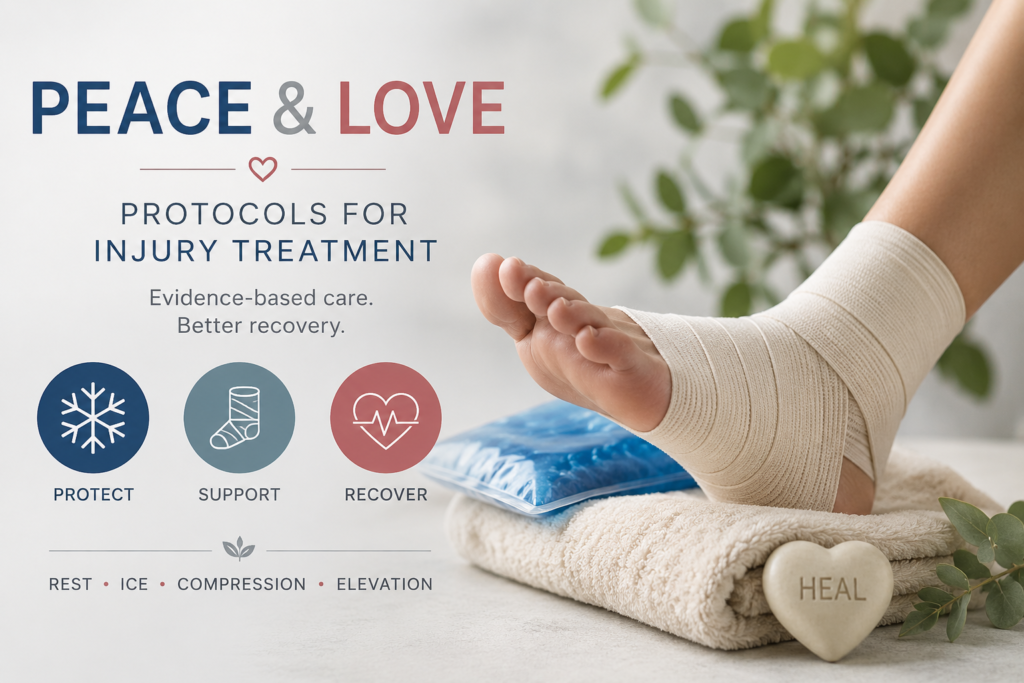
If you’ve suffered a recent injury, you’ve probably been told to follow the familiar advice of RICE – Rest, Ice, Compression and Elevation.
While these principles still have their place, sports medicine and rehabilitation research has evolved. Today’s evidence supports a more active, patient centred approach known as PEACE & LOVE.
At Back On Track Healthcare, our osteopaths use the latest evidence to guide recovery, helping you return to normal activities safely while reducing the risk of long term problems.
What Does PEACE Mean?
PEACE focuses on the first few days after an injury, when inflammation and tissue healing begin.
P – Protect
Protect the injured area by avoiding activities that significantly increase pain during the first one to three days.
This doesn’t mean complete rest. Instead, reduce unnecessary stress while allowing the injured tissues to begin healing naturally.
E – Elevate
Keeping the injured limb elevated above the level of your heart can help reduce swelling by encouraging excess fluid to drain away.
This is particularly useful following ankle sprains, knee injuries and lower leg trauma.
A – Avoid Anti-inflammatory Medication
This often surprises people.
Inflammation is part of your body’s natural healing response. While anti-inflammatory medications can reduce pain, some evidence suggests they may interfere with the early stages of tissue repair.
Always discuss medication with your GP or pharmacist, particularly if you have existing medical conditions.
C – Compress
Compression using an elastic bandage or compression sleeve may help control swelling and provide gentle support during the early stages of recovery.
It should feel supportive but never tight enough to reduce circulation.
E – Educate
One of the most important aspects of recovery is understanding your injury.
Our osteopaths will explain what has happened, how long healing is likely to take and what you can do to help your recovery.
Understanding your injury often reduces anxiety and helps you return to activity with greater confidence.
What Does LOVE Mean?
Once the initial injury has settled, attention turns towards rebuilding strength, movement and confidence.
L – Load
Gentle, progressive movement is one of the most effective ways to encourage tissue healing.
Complete rest for prolonged periods often leads to stiffness, weakness and slower recovery.
Your osteopath will advise when and how to gradually reintroduce movement.
O – Optimism
Your mindset plays an important role in recovery.
People who understand their injury and remain positive often recover more successfully than those who become fearful of movement.
We encourage patients to stay active within comfortable limits and focus on gradual progress.
V – Vascularisation
Pain free cardiovascular exercise, such as walking, cycling or swimming, helps improve circulation and supports tissue healing.
It also benefits overall fitness and wellbeing while you’re recovering.
E – Exercise
Every rehabilitation programme should be tailored to the individual.
Specific exercises improve:
- Strength
- Flexibility
- Balance
- Coordination
- Joint stability
Our osteopaths design personalised exercise programmes that progress as your recovery improves.
Why Osteopaths Use PEACE & LOVE
Osteopathy isn’t simply about treating pain.
We assess how your body moves as a whole and identify the factors that may have contributed to your injury in the first place.
Treatment may include:
- Gentle manual therapy
- Joint mobilisation
- Soft tissue techniques
- Movement assessment
- Rehabilitation exercises
- Advice on returning to work or sport
- Injury prevention strategies
The goal isn’t simply to reduce pain today, but to help prevent the injury from returning.
Should You Still Use Ice?
Yes, but with purpose.
Ice remains useful for reducing pain during the early stages following an acute injury. It should be applied for around 10–20 minutes at a time using a towel between the skin and the ice pack.
However, ice is no longer considered the complete answer to injury management. Modern rehabilitation places much greater emphasis on progressive movement, education and active recovery.
When Should You See an Osteopath?
If your pain isn’t improving after a few days, you’re struggling to return to normal activities or you’re unsure how to manage your injury, professional advice can make a significant difference.
At Back On Track Healthcare, our experienced osteopaths provide thorough assessments, hands on treatment and personalised rehabilitation plans based on the latest evidence.
Whether you’ve sprained an ankle, strained a muscle or picked up a sports injury, we’ll help guide you safely through every stage of your recovery.
Don’t let an injury keep you on the sidelines. Early assessment and the right advice can often speed up recovery and reduce the likelihood of ongoing problems.