It may seem like an unusual question during your first osteopathic appointment, but one of the things we often ask male patients is whether they’ve noticed any changes when passing urine.
What does this have to do with back pain?
The answer lies in a small gland called the prostate.
What is the Prostate?
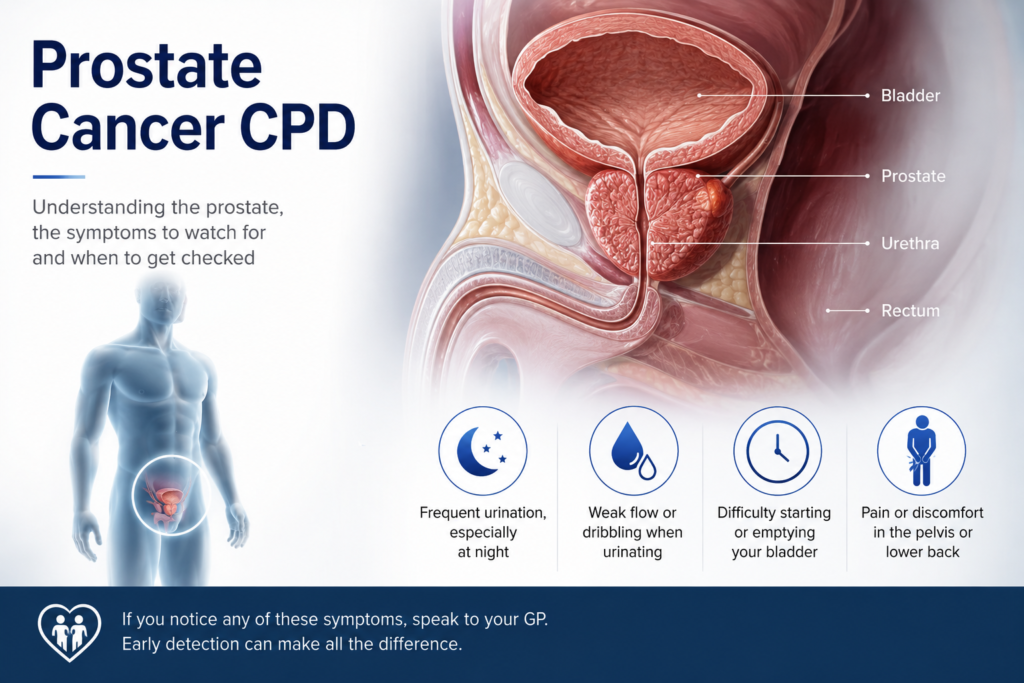
The prostate is a walnut sized gland found only in men. It sits just below the bladder and surrounds the urethra, the tube that carries urine from the bladder out of the body.
Its main role is to produce some of the fluid that forms semen. As men get older, however, the prostate naturally changes and may gradually become larger.
For many men this causes no problems, but for others it can affect urinary function and, occasionally, indicate a condition that requires medical investigation.
Why Does Your Osteopath Ask About It?
At Back On Track Healthcare, we don’t just look at where your pain is. We assess your overall health to ensure there isn’t a more serious underlying cause.
Although the vast majority of back pain is mechanical and responds well to osteopathic treatment, certain medical conditions can also cause back pain.
Changes in bladder function are one of the important screening questions that help us decide whether further medical assessment may be appropriate.
If someone develops back pain alongside new urinary symptoms, we want to ensure there isn’t an underlying condition that needs prompt attention.
Common Prostate Conditions
Benign Prostatic Enlargement (BPE)
As men age, the prostate commonly becomes larger. This is known as Benign Prostatic Enlargement (BPE).
Despite the name, it is not cancer and affects many men over the age of 50.
Symptoms may include:
- Needing to urinate more frequently
- Waking during the night to pass urine
- A weaker urinary stream
- Difficulty starting to urinate
- Feeling that the bladder hasn’t emptied completely
Although frustrating, these symptoms are extremely common and are often successfully managed.
Prostatitis
The prostate can also become inflamed or infected, a condition known as prostatitis.
Symptoms may include:
- Pain when passing urine
- Pelvic or groin pain
- Lower abdominal discomfort
- Occasionally lower back pain
Depending on the cause, prostatitis can often be treated successfully by your GP, sometimes with antibiotics.
Prostate Cancer
Prostate cancer is one of the most common cancers affecting men in the UK.
Importantly, early prostate cancer often causes no symptoms at all, which is why screening discussions with your GP can be important, particularly if you have a family history or are in a higher risk group.
When symptoms do occur, they can be similar to benign prostate enlargement and may include:
- Increased urgency to urinate
- More frequent urination, especially at night
- Difficulty starting to pass urine
- Reduced urinary flow
- Feeling that the bladder never fully empties
- Occasionally blood in the urine or semen
Back pain alone does not usually mean prostate cancer. However, persistent back pain combined with significant urinary symptoms should always be assessed by a medical professional.
When Should You See Your GP?
If you’ve noticed persistent changes in your urinary habits, don’t ignore them.
Your GP may recommend:
- A discussion about your symptoms
- A physical examination
- A PSA (Prostate Specific Antigen) blood test
- Further investigations if appropriate
Most urinary symptoms are not caused by prostate cancer, but it’s always sensible to have them checked.
How Osteopathy Can Help
While osteopaths do not diagnose or treat prostate disease itself, we play an important role in identifying when symptoms may require medical investigation.
Once serious conditions have been excluded, osteopathic treatment can often help manage mechanical lower back pain, improve mobility, reduce muscle tension and support your recovery.
Our aim is always to ensure you receive the right care at the right time. Sometimes that means hands on treatment, and sometimes it means recommending that you see your GP for further assessment.
The Take Home Message
Urinary symptoms are common, particularly as men get older, and in most cases they are caused by benign conditions rather than something more serious.
However, changes in bladder function should never be ignored.
That’s why your osteopath asks about them during your assessment. It’s part of making sure your back pain really is mechanical and that no important warning signs are being missed.
If you’re experiencing back pain or have concerns about your symptoms, our experienced osteopaths are here to help. We’ll carry out a thorough assessment and, if necessary, ensure you receive the appropriate onward referral for further investigation.